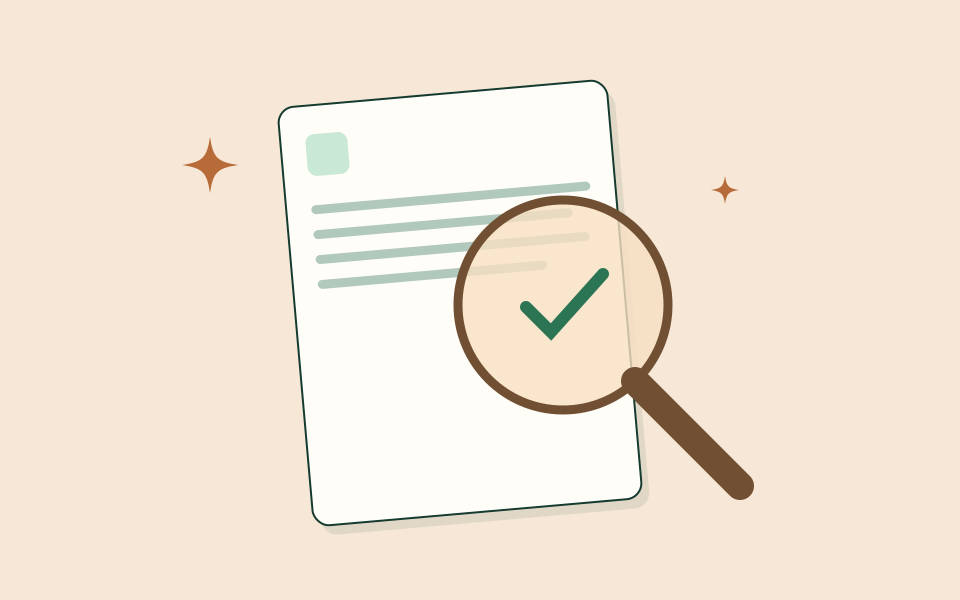
A polished answer can feel finished before it has been checked. Editing creates a useful pause between reading and relying on it. You do not need to challenge every sentence equally. Focus on the parts that determine what someone will believe or do next.
Underline the claims that matter
Separate facts, interpretations, and suggestions. A date, price, named feature, quotation, or statement about a policy deserves a different check from an idea for a headline. Prioritize claims whose failure would change your decision.
Ask where each important claim came from. If the answer refers to a document you supplied, locate the passage. If it cites a website, open the actual page and check that it supports the specific statement.
Look for a missing condition
Advice often becomes misleading when a condition disappears. A feature may apply to one version, one role, one region, or one subscription. A successful example may depend on settings that are not mentioned.
Before using an instruction, ask whether your situation matches its assumptions. If the answer is unclear, keep the instruction provisional rather than filling the gap with confidence.
- What version or date does this depend on?
- Which account or permission is required?
- Is this observed behavior, documentation, or an inference?
- What would make the recommendation unsuitable?
Test the smallest meaningful example
For a code suggestion, inspect the change and run a relevant example in an appropriate test environment. For a spreadsheet formula, try a normal value, a blank cell, and a boundary value. For a drafted message, compare it with the facts and intended recipient.
A test should answer a question about correctness. Repeating the same happy-path example many times does not explore a new failure mode.
Decide what is ready to use
Mark unresolved claims rather than hiding them inside a fluent rewrite. You might keep a useful outline while withholding two unsupported numbers. This is usually more productive than accepting or rejecting the entire answer.
End the review with a clear decision: ready, ready after specific edits, or not yet verified. The quality of an AI-assisted workflow includes this review, not just the speed of the first draft.